The best email marketing for ecommerce in 2026 comes down to thirteen platforms that actually deliver revenue: Klaviyo, Omnisend, Mailchimp, Brevo, MailerLite, ActiveCampaign, Drip, Ortto, GetResponse, HubSpot, Salesforce Marketing Cloud, Shopify Email, and Seguno. Each one fits a different store profile: Shopify-native flow depth (Klaviyo), affordable multichannel with SMS (Omnisend), mainstream brand recognition (Mailchimp), send-based pricing (Brevo), lightweight small-store (MailerLite), mid-market CRM plus automation (ActiveCampaign), revenue attribution (Drip), CDP-native for DTC (Ortto), all-in-one with webinars (GetResponse), enterprise B2C CRM (HubSpot), enterprise commerce cloud (Salesforce), Shopify-native free (Shopify Email), and Shopify-admin embedded (Seguno). This guide covers 2026-verified pricing, ecommerce-specific automations, and how to pick by store size and platform.
Ecommerce features to look out for in an email marketing service
Before picking a platform, understand the nine features that separate a real ecommerce ESP from a generic newsletter tool. If a platform is weak on any of these, your revenue attribution and automation depth will suffer, regardless of what the sales page promises.
Quick heuristic: a real ecommerce ESP scores well on at least 7 of these 9 dimensions. Anything scoring 5 or below is a generic newsletter tool with an ecommerce label attached.
1. A/B testing tools
Two levels matter here. Type 1 is basic subject line and preview text splits; every ESP supports this. Type 2 is multivariate testing across content blocks, send time, and workflow branches inside automations, and this is where mainstream ESPs fall short. Klaviyo, Omnisend, ActiveCampaign, and Drip support Type 2 natively. Mailchimp requires Standard tier ($20/mo minimum) for even basic A/B. MailerLite handles split-testing but not full multivariate.
2. Online store integration depth
The gap between a real ecommerce integration and a “sync via Zapier” bolt-on is measured in latency and data richness. A real integration syncs orders, product catalog, customer LTV, browsing events, cart events, and reviews in near real-time. A weak integration polls hourly and gives you basic order data. For Shopify specifically: Klaviyo, Omnisend, Seguno, and Shopify Email have deep native integrations. Drip and Ortto pair well with Shopify but require configuration. Brevo and MailerLite integrations are functional but shallower.
3. Email templates
Ecommerce-specific templates for welcome series, abandoned cart, browse abandonment, post-purchase, win-back, and product recommendations save you weeks of setup. Klaviyo, Omnisend, Drip, and Ortto ship comprehensive ecommerce template libraries. Mailchimp templates are generic marketing (not ecommerce-optimized). MailerLite and Brevo have limited ecommerce-specific starter templates. Shopify Email leans on Shopify’s product blocks for product-first designs.
4. Email editor and mobile-first design
Drag-and-drop editors are table stakes in 2026, but the depth varies. Look for: dynamic product blocks that pull from your store catalog, conditional content (show different content per segment), and true mobile-first responsive rendering. Omnisend, Klaviyo, and Ortto lead here. Mailchimp editor is polished but conservative. MailerLite editor is clean and simple but shallow on ecommerce dynamic blocks.
5. Contact segmentation
Ecommerce segmentation requires dimensions that generic ESPs do not surface: purchase history, average order value, days since last purchase, cart abandonment count, browse categories, and predictive metrics like predicted lifetime value or churn risk. Klaviyo leads on predictive segmentation. Omnisend, Drip, ActiveCampaign, and Ortto all support the core ecommerce dimensions natively. Mailchimp Standard supports basic ecommerce segments. MailerLite and Brevo lag on segmentation depth.
6. Email automation and workflows
Four core flows drive the majority of ecommerce email revenue: welcome series, abandoned cart, post-purchase, and win-back. Beyond these, look for browse abandonment, back-in-stock, price drop, and customer VIP flows. Automation depth is measured by: number of concurrent workflows, conditional branching, event-based triggers, and integration with SMS/push in the same flow. Klaviyo, Omnisend, ActiveCampaign, Drip, and Ortto handle all four core flows natively. Mailchimp Standard supports them. Starter tiers on GetResponse and Brevo limit workflow count severely.
7. Personalization
Dynamic content that adapts to the recipient (recommended products, personalized subject lines, purchase-history-driven offers) is where good ecommerce ESPs turn into revenue engines. Klaviyo, Omnisend, Drip, and Ortto have mature dynamic content engines with product recommendation blocks that pull from your store catalog. Mailchimp has product blocks but weaker predictive personalization. MailerLite and Brevo support basic merge tags but limited dynamic product content.
8. Sales reporting and revenue attribution
The question is not “how many opens” but “how much revenue did this email generate?” Real ecommerce ESPs surface revenue per email, revenue per subscriber, and total revenue attributed to email (including view-through attribution). Klaviyo, Drip, Ortto, and Omnisend report revenue attribution natively. Salesforce Marketing Cloud has deep revenue reporting for enterprise. Mailchimp reports basic ecommerce metrics but shallower attribution. MailerLite requires third-party analytics for revenue reporting.
9. CRM features
Ecommerce ESPs increasingly bundle light CRM: contact profiles with full purchase history, lifecycle stage, tags, notes, and communication history. HubSpot and Salesforce Marketing Cloud offer full CRM. ActiveCampaign includes a real sales CRM (Marketing + CRM plans). Ortto has a customer data platform (CDP) which is CRM-adjacent. Klaviyo and Omnisend have contact profile depth but no true CRM. If your marketing team collaborates with sales or service, prioritize an ESP with real CRM alignment.
The 13 best ecommerce email platforms at a glance (2026)
| Platform | Starts at | Free plan | Best for | Ecommerce flows depth |
|---|---|---|---|---|
| Klaviyo | $20/mo (501-1,000 contacts) | 250 contacts, 500 emails/mo | Shopify at scale, deep segmentation | Deep: cart, browse, post-purchase, VIP, predictive analytics |
| Omnisend | $16/mo (500 contacts) | 250 contacts, 500 emails + SMS credits | Multichannel value (email + SMS), Shopify/WooCommerce | Deep: cart, browse, post-purchase, SMS/push in same flow |
| Mailchimp | $13/mo Essentials (500 contacts) | 250 contacts, 500 emails/mo (cut Jan 2026) | Mainstream generic marketing | Medium (Standard $20 minimum for automation) |
| Brevo | $9/mo Starter (5k emails) | 300 emails/day, 500 contacts | Large lists sent infrequently, send-based pricing | Medium: cart recovery on Business ($18 for 5k emails) |
| MailerLite | $10/mo Growing Business (1k contacts) | 250 contacts, 2,500 emails/mo (cut Jun 2026) | Small stores, lightweight, simple flows | Basic: welcome, abandoned cart on paid plans |
| ActiveCampaign | $15/mo Marketing Lite (1k contacts) | 14-day trial, no permanent free plan | Mid-market with CRM alignment + deep automation | Deep: cart, browse, post-purchase, plus CRM sales flows |
| Drip | $39/mo (all features) | 14-day trial, no free plan | Revenue-attribution focused ecommerce | Deep: revenue per person, purchase-based flows |
| Ortto | $509/mo Professional (10k contacts) | 14-day trial | Mid-market DTC brands, CDP-native unified data | Deep: unified email + SMS + push + in-app with CDP |
| GetResponse | $19/mo Starter (1k contacts) | 500 contacts, forever | All-in-one with webinars + funnels | Medium on Marketer $59/mo (cart recovery, funnels) |
| HubSpot | $20/mo Marketing Starter | Yes, limited | B2C brands needing CRM + marketing suite | Deep on Professional $890/mo (usually overkill for pure ecom) |
| Salesforce Marketing Cloud | ~$1,250/mo Pro Edition | None, contact sales | Enterprise B2C, Commerce Cloud alignment | Deep: full journey builder, Einstein AI, CDP-adjacent |
| Shopify Email | Free (10k emails/mo) then $0.001/email | 10k emails/mo included with any Shopify plan | Shopify stores wanting free native email | Basic to medium: templates, automations, product blocks |
| Seguno | $10/mo (250 subscribers) | Yes, Shopify-app free tier | Shopify merchants who never leave the admin | Basic to medium (native Shopify only) |
Prices verified against each vendor’s pricing page in July 2026. Every platform bills on contact count (Mailchimp, Klaviyo, Omnisend, MailerLite, ActiveCampaign, Drip, Ortto, GetResponse, HubSpot, Salesforce, Seguno) except Brevo, which bills on emails sent per month, and Shopify Email, which bills per email delivered above the free 10k monthly allocation. That difference is critical: Brevo is dramatically cheaper for large lists sent infrequently, and Shopify Email is essentially free for stores sending under 10k emails/month.
Most popular ecommerce email platforms (2026)
Aggregated market presence: G2 review volume, Shopify App Store rankings, review-site inclusions
Score is an aggregate of G2 review count, review-site inclusions, and Shopify App Store presence, normalized to Klaviyo = 100. Higher score reflects market presence, not “best fit for you”. A small tool like Seguno can be perfect for the right merchant even at low market share.
Plan by plan: we keep a pricing page for every platform in this comparison that publishes one: Klaviyo, Omnisend, Mailchimp, Brevo, MailerLite, ActiveCampaign, Drip, GetResponse and HubSpot. Each one lists the plans, the contact tiers and what the entry price actually covers.
Klaviyo: the Shopify-native revenue-per-subscriber champion
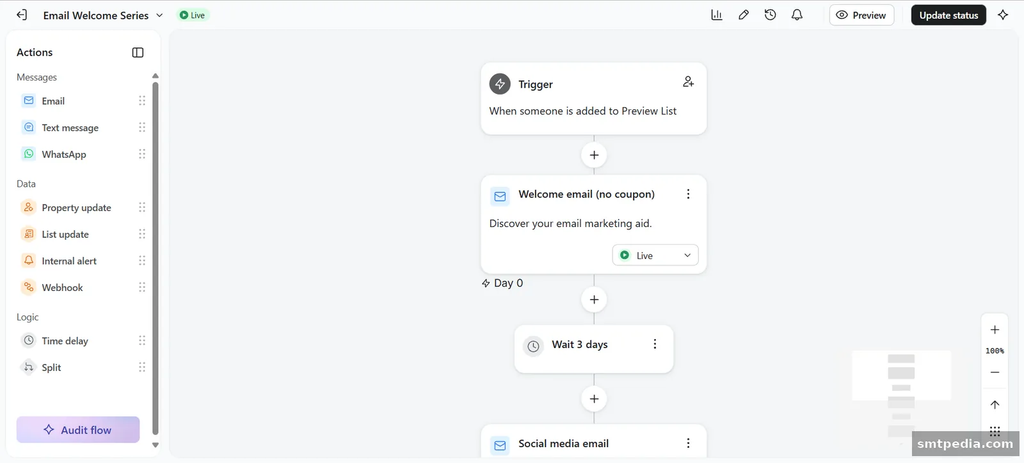
Klaviyo is the default choice for Shopify stores serious about email as a revenue channel. Its Shopify integration syncs orders, products, browsing behavior, and reviews in real time, feeding segmentation and flows that competitors struggle to match on depth. Predictive analytics forecast lifetime value and churn risk per contact. If email drives 25-40% of your ecommerce revenue (the industry benchmark), Klaviyo pays for itself quickly.
Pricing 2026 Free plan up to 250 contacts and 500 emails/month. Email paid plan starts at $20/month for 501-1,000 contacts, scaling with list size. SMS billed separately per country. Enterprise custom.
Ecommerce Integrations Deepest native Shopify integration in the market with real-time sync of orders, products, browsing events, cart events, reviews, and customer LTV. First-class WooCommerce, BigCommerce, and Magento connectors. Custom via API for headless commerce.
Key Gotcha SMS is billed separately per country and can escalate fast for global lists. Free plan capped at 250 contacts; real ecommerce stores outgrow it within weeks.
Best For Shopify stores over $500k annual revenue, DTC brands, teams with a dedicated email marketer, stores where segmentation depth and predictive analytics justify the premium. Also strong on WooCommerce and BigCommerce, though the integration depth is highest on Shopify.
Omnisend: the value-focused multichannel challenger
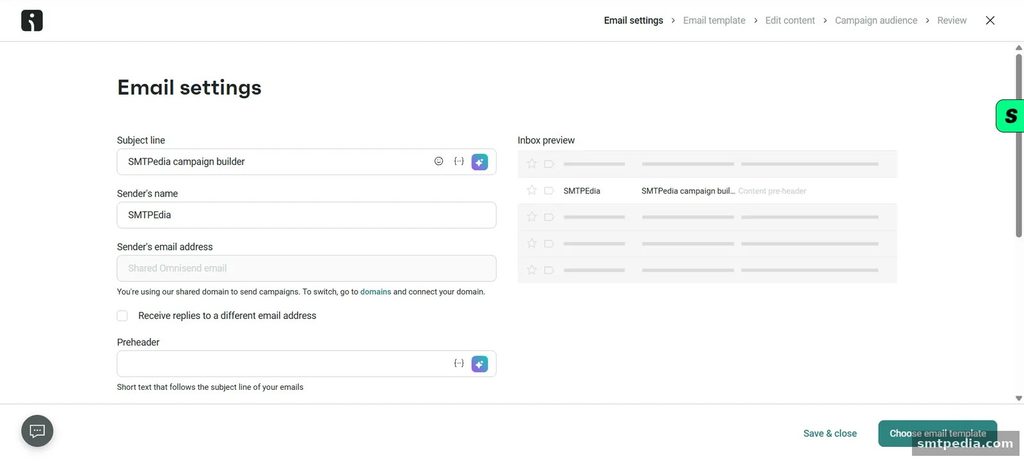
Omnisend delivers roughly 80% of Klaviyo’s power at half the price, with email, SMS, and web push built into the same platform (not billed separately). This makes it the best choice for small and mid-size stores that want to coordinate email + SMS flows without paying two vendors. Native apps for Shopify, WooCommerce, BigCommerce, Wix, Magento, and Squarespace cover the major ecommerce stacks.
Pricing 2026 Free plan 250 contacts, 500 emails/month, plus SMS credits. Standard starts around $16/month; Pro adds more SMS credits and features. Pricing scales with contacts; SMS included in plan on higher tiers.
Ecommerce Integrations Native apps for Shopify, WooCommerce, BigCommerce, Wix, Magento, and Squarespace. Real-time sync of orders, cart events, and browse behavior. Product recommendation blocks pull directly from your store catalog for dynamic content.
Key Gotcha SMS credit allocation is limited on Standard tier; heavy SMS senders burn through credits and need to buy add-on packs or upgrade to Pro.
Best For Small to mid-size stores under about $1M annual revenue that want email + SMS + push in one platform at predictable cost. First choice for WooCommerce and multi-platform sellers.
Mailchimp: the mainstream default with 2026 gotchas
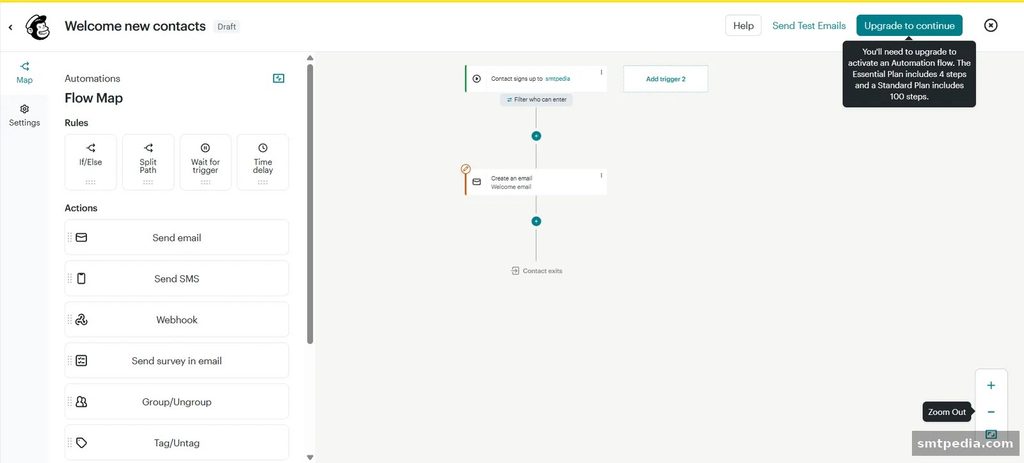
Mailchimp remains the platform most store owners start on, usually because they recognized the brand before they had a store. In 2026 it still has real ecommerce features (Shopify integration, abandoned cart, product blocks, purchase-based segmentation, customer journey builder), but the pricing and free plan cuts have made it a weaker choice for new stores evaluating fresh.
Pricing 2026 Free plan cut to 250 contacts and 500 emails/month in January 2026 (down from 500/1,000). Essentials $13/month starts at 500 contacts but has no multi-step automation. Standard $20/month is the real ecommerce starting point (unlocks automation). At 5,000 contacts: Essentials $75/mo, Standard $100/mo. Premium $350/month (10k contacts).
Ecommerce Integrations Native integrations with Shopify (reintroduced in 2023 after being cut in 2019), WooCommerce, BigCommerce, and Squarespace. Salesforce Commerce Cloud connector for enterprise. Integration depth trails Klaviyo and Omnisend on real-time event granularity but functional for standard flows.
Key Gotcha Mailchimp bills for unsubscribed and non-engaged contacts unless you manually archive them. A 2,000-subscribed / 800-unsubscribed audience = 2,800 billable contacts, pushing you into a higher pricing tier. SMS not included on any tier (add-on).
Best For Existing Mailchimp users deeply integrated with the ecosystem. Not the strongest first choice for a fresh ecommerce store in 2026 given the reduced free plan and rapid price hikes.
Brevo: the send-based pricing outlier
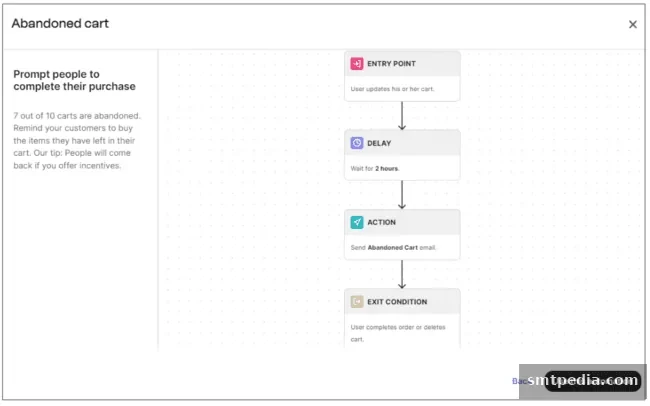
Brevo (formerly Sendinblue) is the only major ESP that prices by emails sent per month rather than contact count. This model is dramatically cheaper for large lists sent infrequently (e.g. 50,000 contacts, one email/month = 50k emails = $65/month on Starter), and dramatically more expensive for small lists sent daily. Native Shopify and WooCommerce integrations, decent automation on Business tier.
Pricing 2026 Free plan 300 emails/day (~9,000/mo) with 500 contacts (Brevo branding on emails). Starter $9/month for 5,000 emails (no automation). Business $18/month for 5,000 emails with automation, landing pages, multi-user. Higher volume: 20k emails ~$32-69/mo depending on tier; 100k emails ~$65-150/mo. Professional $499/mo starts at 150k emails.
Ecommerce Integrations Native plugins for Shopify, WooCommerce, PrestaShop, Magento, and WordPress. Real-time contact and order sync. Cart abandonment automation requires Business tier ($18/mo minimum). Shallower on browse-abandonment events than Klaviyo or Omnisend.
Key Gotcha On the Free plan and Starter, your emails include Brevo branding. Removing it costs $12/month as an add-on.
Best For Ecommerce stores with large stored customer bases who email infrequently (monthly newsletters, quarterly promotions), and any store where the emails-per-contact ratio is under 4/month. B2C brands that also need transactional email in the same platform.
MailerLite: cheapest for small stores (with recent cuts)
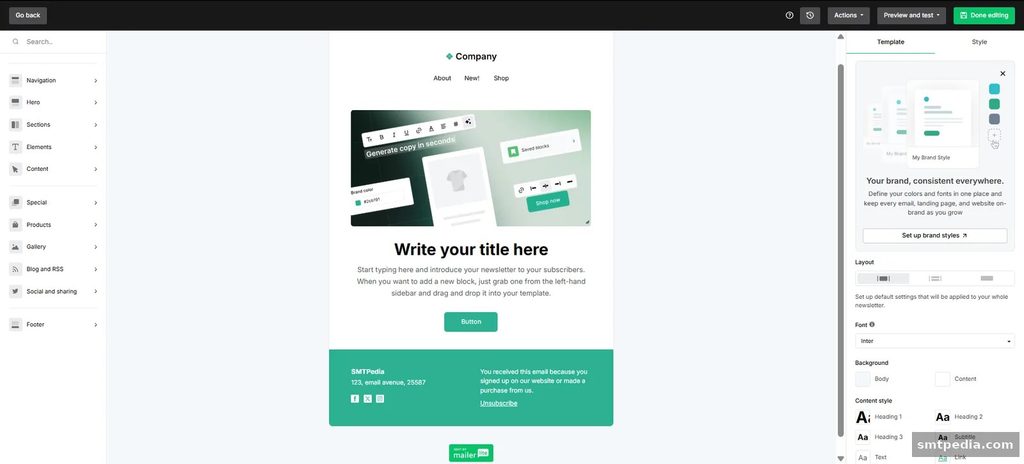
MailerLite was long the go-to affordable option for small stores. In 2026 the free plan was cut twice (once in September 2025 from 1,000 to 500 contacts, again in June 2026 from 500 to 250 contacts and from 12,000 to 2,500 monthly emails). Paid plans also went up 10-30%. It remains cheap in absolute terms, but the value proposition is weaker than it was in 2024.
Pricing 2026 Free plan 250 contacts, 2,500 emails/month. Growing Business starts at $10/month (1,000 subs annual billing) with unlimited emails. Advanced $20/month adds more automation and users. Enterprise custom for 100k+ subscribers. 10% discount on annual billing. Transactional email requires a separate product (MailerSend) starting at $7/month.
Ecommerce Integrations Native Shopify, WooCommerce, and BigCommerce integrations with real-time customer and order sync. Automation triggers on purchase and cart abandonment. Product blocks in emails. Event granularity is simpler than Klaviyo or Omnisend but covers the essentials for small stores.
Key Gotcha Free plan was cut twice in 12 months (September 2025: 1,000 to 500 contacts; June 2026: 500 to 250 contacts and 12k to 2.5k emails). Paid plans also increased 10-30%. Sign of a company in monetization mode; expect further cuts.
Best For Small stores under 5,000 contacts on Shopify or WooCommerce that want a clean editor and basic ecommerce automations at the lowest price. Not the depth choice; if you outgrow it, plan for a migration to Klaviyo or Omnisend.
ActiveCampaign: mid-market CRM + automation champion
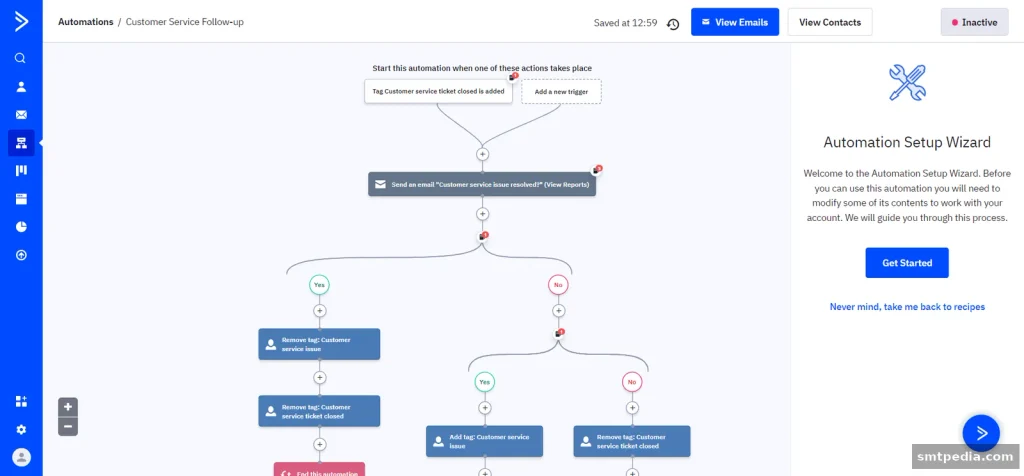
ActiveCampaign is the reference platform for mid-market stores that need genuine automation depth plus a real CRM in the same tool. Where Klaviyo focuses on ecommerce data depth, ActiveCampaign focuses on customer experience automation across email, SMS, chat, and sales pipelines. For DTC brands where marketing, sales, and service teams share customer data, ActiveCampaign consolidates workflows that would otherwise sprawl across Klaviyo + a separate CRM.
Pricing 2026 Marketing Lite starts at $15/month for 1,000 contacts (automation included). Marketing Plus at $49/mo adds landing pages, lead scoring, and split automations. Marketing Pro at $79/mo adds attribution reporting and split testing. Marketing Enterprise for large accounts. Sales CRM is priced separately or in a Marketing + Sales bundle. Scales with contact count similar to Klaviyo. 14-day free trial, no permanent free plan.
Ecommerce Integrations Deep native integrations with Shopify, WooCommerce, BigCommerce, Magento, and Square. Real-time sync of orders, customers, products, and abandoned carts. Behavior-based triggers on catalog events (product views, category browses) match Klaviyo’s depth.
Key Gotcha The Sales CRM is priced separately from Marketing plans. If you need CRM + automation together, the Marketing + Sales bundle roughly doubles your monthly cost. Marketing Lite ($15) excludes lead scoring and split automations.
Best For DTC brands between $500k and $10M revenue where marketing needs to hand off to sales (high-value products, subscriptions, B2B-adjacent). Also strong for content-heavy brands running podcast/YouTube/course monetization alongside ecommerce.
Drip: revenue-focused ecommerce automation
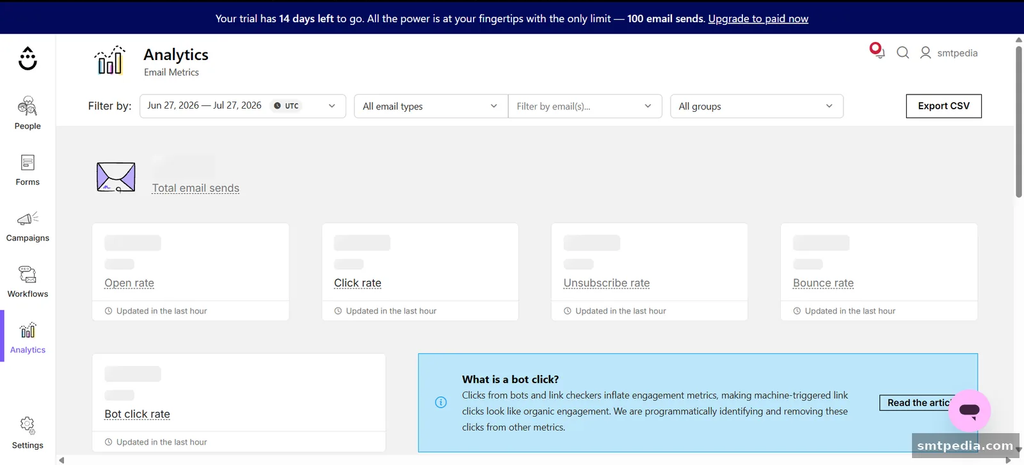
Drip is purpose-built for ecommerce with a single differentiator: every metric ties back to Revenue Per Person rather than open or click rates. Workflows, segments, and campaigns all surface revenue attribution natively. Real-time store sync with Shopify, WooCommerce, BigCommerce, and Magento; behavior-based automation across purchase history, browsing, and cart events.
Pricing 2026 Flat $39/month for all features (small-store tier), scaling with contacts. 14-day free trial, no permanent free plan. Every plan includes every feature (no upsell to unlock automation).
Ecommerce Integrations Real-time store sync with Shopify, WooCommerce, BigCommerce, and Magento. Behavior-based automation across purchase history, browsing, and cart events. Excellent API for custom or headless commerce setups. Rebuilt around revenue attribution rather than open and click metrics.
Key Gotcha $39/mo entry price is high for stores under 2,000 contacts. No permanent free plan, only a 14-day trial. Klaviyo Free or Omnisend Standard offer better value at that scale.
Best For Growing stores focused on retention and lifetime value where the CFO wants revenue-per-email numbers, not just opens and clicks. Mid-size DTC brands that outgrew MailerLite but do not need Klaviyo’s premium.
Ortto: CDP-native mid-market DTC platform
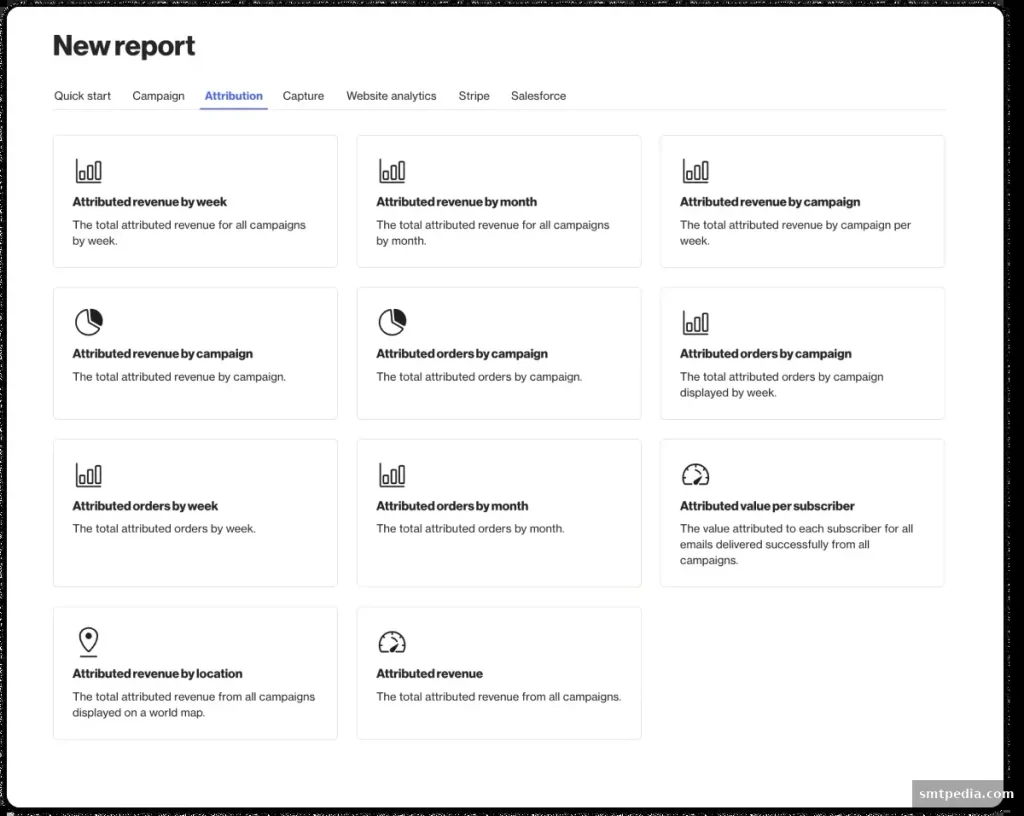
Ortto (formerly Autopilot) is the answer for mid-market DTC brands that need unified customer data across email, SMS, in-app messages, push notifications, and web campaigns without stitching together five separate tools. The core differentiator is the built-in customer data platform (CDP): Ortto ingests events from your store, mobile app, website, and support tool, then lets you segment and message from that unified profile. Klaviyo has deep data depth but is not technically a CDP; Ortto is CDP-native.
Pricing 2026 Professional plan starts at $509/month (10,000 contacts), Business at $849/mo, Enterprise custom. All plans include email, SMS, in-app messages, forms, journeys, and the CDP. Contact-based scaling. 14-day free trial.
Ecommerce Integrations Native Shopify integration with full order and customer sync. Supports WooCommerce, BigCommerce via native apps or API. The CDP lets you unify Shopify data with data from Segment, Rudderstack, or direct API events, which is especially valuable for brands running headless commerce or custom checkouts.
Key Gotcha Entry price of $509/month makes it inaccessible for early-stage brands. No self-serve tier for very small stores; requires a sales conversation for anything but Professional plan.
Best For DTC brands between $1M and $10M revenue with a mobile app or complex multi-channel customer journey. Especially strong for subscription commerce (Recharge integration is deep), replenishment brands, and any store where SMS + email + in-app messaging need to coordinate off the same customer profile.
GetResponse: all-in-one for ecommerce + content
GetResponse is positioned between focused ecommerce ESPs (Klaviyo, Omnisend) and full marketing suites (HubSpot). Its unique angle: bundled webinars (Creator plan+), landing pages, and funnels alongside email. For a store that also sells courses, hosts webinars, or runs content marketing, GetResponse consolidates several tools into one bill.
Pricing 2026 Free plan 500 contacts forever. Starter $19/month (1,000 contacts) but only 1 automation workflow. Marketer $59/month unlocks unlimited automation, ecommerce, abandoned cart, promo codes. Creator $69/month adds webinars and course creator. Enterprise (MAX) custom for SMS + dedicated IP. See our full GetResponse pricing breakdown for tier-by-tier detail.
Ecommerce Integrations Native plugins for Shopify, WooCommerce, PrestaShop, Magento, BigCommerce, and Etsy. Product recommendations pulled from your store catalog. Cart abandonment automation available on Marketer plan ($59/mo) and above, not on Starter.
Key Gotcha Starter plan ($19/mo) only includes 1 automation workflow, effectively forcing an upgrade to Marketer ($59/mo) for real ecommerce automation. The listed ‘Starter’ price is misleading if you need cart recovery.
Best For Store owners who also sell courses, run webinars, or need landing pages + funnels + email in one platform. Not the deepest ecommerce automation, but the broadest all-in-one.
HubSpot: enterprise B2C CRM + marketing
HubSpot Marketing Hub is a full CRM + marketing platform, not an ecommerce ESP specifically. For a pure ecommerce store, HubSpot is almost always overkill and overpriced. It fits when you need CRM alignment between marketing, sales, and service teams (typical of larger B2C brands or B2B-adjacent ecommerce).
Pricing 2026 Marketing Starter around $20/month. Marketing Professional $890/month (where the real automation lives). Enterprise $3,600+/month. Requires annual commitment on Pro and Enterprise.
Ecommerce Integrations Native Shopify integration via the HubSpot for Shopify app. WooCommerce and BigCommerce through ecosystem apps. Salesforce Commerce Cloud via native connectors. Deep CRM alignment with unified customer profiles across marketing, sales, and service touchpoints.
Key Gotcha Marketing Starter ($20/mo) is functionally limited. The real automation lives on Professional at $890/mo, a 44x price jump. Both Pro and Enterprise require annual commitment. Almost always overkill for pure ecommerce workloads.
Best For Larger B2C brands where email is one channel among CRM, sales enablement, and customer service. Skip for pure ecommerce workloads under $5M revenue.
Salesforce Marketing Cloud: enterprise B2C standard
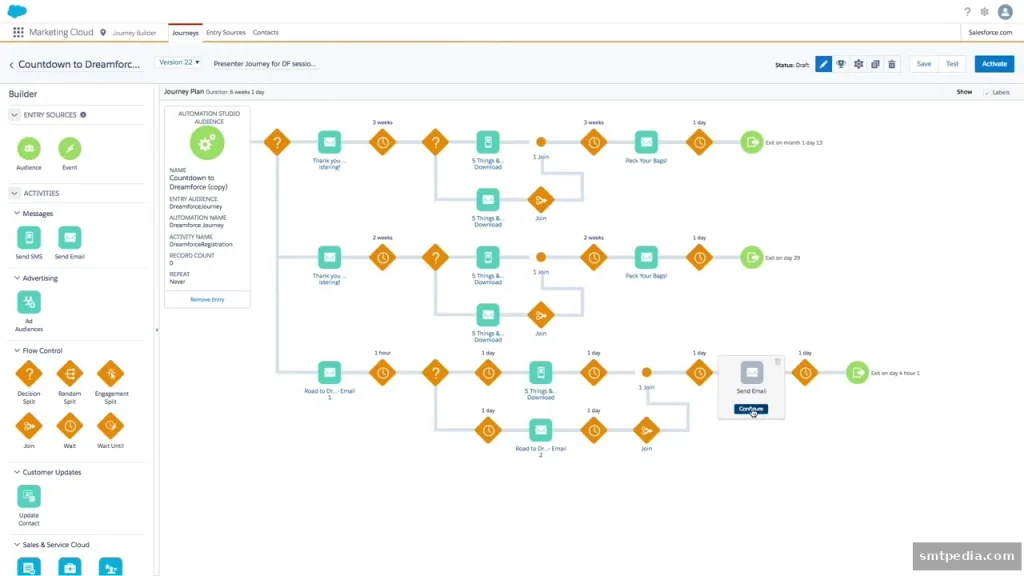
Salesforce Marketing Cloud (SFMC) is the enterprise B2C standard for large brands (typically $10M+ annual revenue) that need marketing tightly integrated with Commerce Cloud, Service Cloud, and Data Cloud (CDP). The core differentiator vs HubSpot: full commerce integration with Salesforce Commerce Cloud, Einstein AI for predictive personalization, and Journey Builder for cross-channel orchestration. If your enterprise runs on Salesforce, SFMC is the default choice; if not, HubSpot or Klaviyo will serve you better.
Pricing 2026 Not published; contact sales. Approximate market ranges: Pro Edition around $1,250/month, Corporate around $3,750/month, Enterprise custom (typically $10,000-$50,000+/month depending on volume and modules). Multiple modules bill separately (Journey Builder, Content Builder, Advertising Studio, Loyalty Management). Annual commitment.
Ecommerce Integrations Native and deepest with Salesforce Commerce Cloud (formerly Demandware). Also connects to Shopify Plus, Adobe Commerce (Magento), and custom platforms via APIs. Einstein AI provides product recommendations, send-time optimization, and predictive audiences.
Key Gotcha Pricing is not published; contact sales required. Multiple modules bill separately (Journey Builder, Content Builder, Advertising Studio, Loyalty Management), so the ~$1,250/mo Pro Edition floor is misleading. Total cost with modules and services typically starts around $3-5k/mo.
Best For Enterprise B2C brands with $10M+ revenue, complex org structure (multiple brands, geographies, or channels), and an existing Salesforce investment. Requires a dedicated marketing ops team; not deployable by a solo marketer.
Shopify Email: the free Shopify-native option

Shopify Email is Shopify’s own email marketing tool, built into the Shopify admin at no extra cost for any Shopify plan. Every Shopify store gets 10,000 emails per month free, then pays $0.001 per additional email. For small stores under 10k sends monthly, this is effectively free ecommerce email marketing. Depth is basic to medium: templates, automations (welcome, abandoned cart, thank-you), product blocks pulled from your store catalog, and basic segmentation.
Pricing 2026 Free for the first 10,000 emails per month with any Shopify plan (Basic $39/mo, Shopify $105/mo, Advanced $399/mo). Additional sends billed at $0.001 per email (so $10 per 10k additional emails). No separate contact-based pricing; you only pay for what you send.
Ecommerce Integrations Native to Shopify (built by Shopify). Zero configuration. Uses Shopify customer data, product catalog, and order events directly. Not designed for anything other than Shopify.
Key Gotcha Automations are basic (welcome, cart, thank-you). No advanced segmentation, no predictive analytics, no cross-channel orchestration. Most stores outgrow it within 6-12 months and migrate to Klaviyo, Omnisend, or Drip.
Best For New Shopify stores validating email marketing before committing to a paid platform. Small Shopify stores sending under 10k emails monthly where the built-in automations (welcome, cart, thank-you) cover the core needs. Not the depth choice; if you scale, expect to migrate to Klaviyo, Omnisend, or Drip within 6-12 months.
Seguno: embedded in Shopify admin
Seguno is a Shopify-native email app that lives inside the Shopify admin. No external dashboard, no separate login, no data sync (because it runs on Shopify’s data directly). For merchants who want email marketing without leaving the shop backend, Seguno is uniquely convenient. Depth is basic to medium, not comparable to Klaviyo or Omnisend on flows.
Pricing 2026 Free tier for small stores. Paid plans start around $10/month at 250 subscribers, scaling with subscriber count. Shopify billing (charged through your Shopify subscription).
Ecommerce Integrations Shopify-only by design. The entire product runs inside the Shopify admin. Zero configuration required, uses Shopify customer, product, and order data directly. No integrations with any other ecommerce platform.
Key Gotcha Shopify-only by design means zero portability. If you leave Shopify or add a WooCommerce sister site, Seguno cannot follow. Your entire email marketing operation is locked to Shopify.
Best For Shopify-only merchants who value staying inside the admin over feature depth. Best for stores under 1,000 subscribers where the built-in ecommerce automations cover the core needs (welcome, abandoned cart, thank-you).
How to pick by store size
- Under 500 contacts (starting out): Shopify Email if you are on Shopify (free 10k emails/month with any plan). Otherwise Omnisend Free (250 contacts + SMS credits) or GetResponse Free (500 contacts forever). Skip Mailchimp Free (250 contacts, no automation, brand watermark).
- 500 to 5,000 contacts (small store): Omnisend Standard ($16/mo) or MailerLite Growing Business ($10/mo) for the cheapest option. On Shopify: Shopify Email remains free up to 10k sends/mo, or upgrade to Klaviyo Free (up to 250 contacts). Seguno on Shopify for admin-only workflow.
- 5,000 to 25,000 contacts (mid-size): Klaviyo (if Shopify), Omnisend (if multi-platform), ActiveCampaign (if CRM alignment matters), or Drip ($39/mo, revenue-focused). Brevo Business worth calculating if you email infrequently. Ortto if you have a mobile app or need CDP-level data unification.
- 25,000 to 100,000 contacts (established DTC): Klaviyo, Drip, Ortto, or Omnisend Pro. HubSpot only if CRM alignment across teams is critical. ActiveCampaign scales here too. Mailchimp Premium at 25k gets expensive fast without matching feature depth.
- 100,000+ contacts (enterprise): Salesforce Marketing Cloud for large B2C brands on Commerce Cloud, HubSpot Enterprise for CRM-first orgs, Klaviyo for pure ecommerce depth, or Ortto Enterprise for CDP-centric DTC operations.
How to pick by ecommerce platform
| Platform | Best fit | Second choice | Notes |
|---|---|---|---|
| Shopify | Klaviyo | Omnisend / Shopify Email | Klaviyo has the deepest native integration. Shopify Email for free start. Seguno for admin-only workflow. |
| Shopify Plus (enterprise) | Klaviyo | Salesforce Marketing Cloud | Klaviyo for pure ecom depth. SFMC if multi-brand or Commerce Cloud already in play. |
| WooCommerce | Omnisend | Klaviyo / MailerLite / ActiveCampaign | Omnisend’s WooCommerce integration is closest to feature parity with its Shopify one. |
| BigCommerce | Klaviyo | Omnisend / Drip / ActiveCampaign | All four have first-class BigCommerce apps. Klaviyo edges on segmentation, ActiveCampaign on CRM. |
| Magento / Adobe Commerce | Klaviyo | Drip / Salesforce MC / HubSpot | Klaviyo has the strongest Magento connector; SFMC for enterprise Adobe Commerce alignment. |
| Wix / Squarespace / other | Omnisend | MailerLite / Brevo | Omnisend has native apps. MailerLite and Brevo integrate via Zapier or API. |
| Custom (headless / API) | Drip | Klaviyo / Ortto / Brevo | Drip and Ortto both shine with clean event data. Ortto’s CDP is best for headless commerce. |
| Salesforce Commerce Cloud | Salesforce Marketing Cloud | Klaviyo | SFMC is the native choice. Klaviyo works via connector but you lose the Einstein AI integration. |
If you run a smaller Shopify or WooCommerce store and don’t want to build flows yourself, Emailwish is worth a look: it sets up essential automations like abandoned cart, welcome, and winback for you, so you can start sending without designing each workflow from scratch.
Changelog
Show update history
Frequently Asked Questions
What is the best email marketing platform for ecommerce in 2026?
Klaviyo for Shopify stores serious about email revenue, Omnisend for multichannel value with email + SMS, and Mailchimp only if you are already deeply integrated. Drip is the strongest choice for revenue-attribution focus. There is no single “best” answer, only the best fit for your store size, platform, and email frequency.
What is the cheapest ecommerce email platform in 2026?
At the small-store end, MailerLite Growing Business at $10/month or Brevo Starter at $9/month are the cheapest paid plans. Free plan-wise, GetResponse (500 contacts forever) is the most generous, followed by Omnisend and Klaviyo (250 contacts each). Skip Mailchimp Free unless you never plan to grow past 250 contacts.
Klaviyo vs Omnisend: which one for a Shopify store?
Klaviyo wins on depth (segmentation, predictive analytics, integration ecosystem). Omnisend wins on value (email + SMS + push in one bill at ~50% of Klaviyo’s cost at the same contact count). For stores under about $1M annual revenue, Omnisend usually delivers 80% of Klaviyo’s revenue impact at half the price. Above $1M with a dedicated email marketer, Klaviyo’s depth starts paying off.
Is Mailchimp still worth it for ecommerce in 2026?
Only if you are already deeply invested (existing templates, integrations, workflows). For a fresh store evaluating in 2026, Mailchimp’s reduced free plan (250 contacts down from 500) and repeated price hikes make it a weaker choice. Standard $20/month is the real starting point since Essentials $13/mo has no automation. Klaviyo, Omnisend, and MailerLite typically offer more ecommerce depth at the same or lower cost.
Does Brevo’s send-based pricing work for ecommerce?
Yes when your emails-per-contact ratio is under 4/month. A store with 50,000 contacts sending one campaign a month (50k emails) pays roughly $65/month on Brevo Starter. The same store on Mailchimp Standard would pay $270+/month. Where Brevo becomes expensive: daily nurture sequences that push emails-sent well above stored contacts. Do the math for your actual sending cadence before switching.
Which ecommerce email flows should I set up first?
The four flows that drive most ecommerce email revenue: welcome series (fires when someone signs up), abandoned cart (fires when cart is abandoned for 1-24 hours), post-purchase (fires after order, drives repeat purchase), and win-back (fires 60-120 days after last purchase). These four alone routinely drive 25-40% of ecommerce revenue when set up properly. Klaviyo, Omnisend, Drip, and Mailchimp Standard all support these flows natively; MailerLite and Brevo Business also.
Can I do ecommerce email without SMS in 2026?
Yes, but you leave revenue on the table. Cart-abandonment SMS following an email typically recovers 10-15% additional revenue vs email alone. If SMS matters to your strategy, prefer Omnisend (SMS included) or Klaviyo (SMS billed separately per country) over Mailchimp (SMS add-on) or MailerLite (no SMS in main plans).

About the Author

Alaa · LinkedIn
Email infrastructure specialist with 8+ years of hands-on experience in SMTP, deliverability, and email verification. I’ve configured and troubleshot mail systems across Postfix, Exchange, and cloud relays, managed IP reputation and warmup campaigns, and built verification pipelines processing millions of addresses. My work spans DNS authentication (SPF, DKIM, DMARC, BIMI), bounce handling, blocklist monitoring, and compliance frameworks including CAN-SPAM and GDPR. I write every article on SMTPedia to give email professionals, developers, and marketers the accurate, RFC-grounded reference they need.
About SMTPedia
SMTPedia is an independent email industry reference covering SMTP, IMAP, POP3, email deliverability, marketing platforms, DNS authentication, and email verification. Every article is researched from official provider documentation, IETF RFCs, and industry best practices. Settings and configurations are verified quarterly.
We are cited as a source by ChatGPT, Microsoft Copilot, and thousands of email professionals worldwide. Learn more about our editorial process.