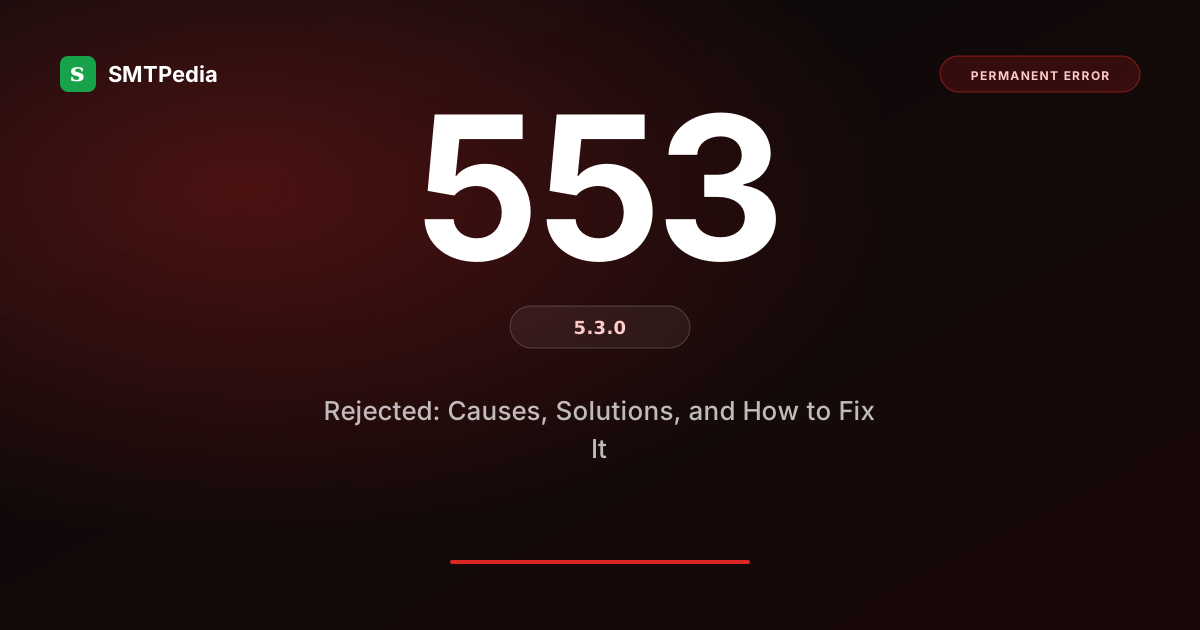
553 your IP is on our block listWhat does 553 your IP is on our block list mean?
The receiving server maintains an internal IP block list (separate from public DNSBLs like Spamhaus or Barracuda) and your sending IP is on it. Unlike public blocklists where the listing source and removal process are transparent, internal block lists are managed by the recipient organization or hosting provider directly. The 553 makes it permanent: no automatic retry will succeed. The removal path is to contact the receiving server administrator directly. Common contexts are corporate MTAs, smaller ISPs, and hosting providers that operate their own filtering layer on top of public DNSBLs.
Is this a soft or hard bounce?
Internal block lists do not have a self-service removal page. The fix path is direct contact with the recipient postmaster or system administrator. Be ready to provide your IP, sending domain, and evidence of legitimate use.
Common causes
Someone at the recipient domain reported your mail as spam and the admin block-listed your IP at the MTA level.
Your IP matches a range or pattern the admin has chosen to block (region-based filters, hosting provider blocks, etc.).
Admin imported a public DNSBL listing into their internal block list, so even after the public listing clears, the internal entry remains.
On shared infrastructure, another sender on your IP triggered the block. The admin blocked the IP without distinguishing tenants.
How to fix it
Use whois <recipient-domain> for the abuse contact. Check the recipient’s website for a postmaster page. Many domains publish a postmaster email at postmaster@<domain>.
Document your sending domain, SPF/DKIM/DMARC setup, opt-in proof if mailing list, and any subscription confirmation logs the recipient might have.
Send a polite removal request to the recipient postmaster including the bounce text. Acknowledge that you understand internal block lists are at their discretion.
Track sender reputation and check public blocklist monitoring in case the internal listing originated from a public DNSBL match.
Provider-specific notes
| Context | Approach |
|---|---|
| Corporate or enterprise MTA | Contact the IT helpdesk or postmaster of the recipient domain. Most enterprises maintain documented removal procedures. |
| Small ISP or hosting provider | May require submitting a support ticket. Document the bounce log carefully. |
| Generic | Internal block lists rarely document removal. Politeness and clear evidence of legitimate use are the main levers. |
Related error codes
Prevent the bounces that hurt your sender IP
Internal block listings often start with a single spam complaint driven by sending to bad addresses. SMTPing catches invalid addresses before you send, reducing the complaint vector. 25 free checks daily, no card required.
Try SMTPing free →
About the Author

Alaa · LinkedIn
Email infrastructure specialist with 8+ years of hands-on experience in SMTP, deliverability, and email verification. I’ve configured and troubleshot mail systems across Postfix, Exchange, and cloud relays, managed IP reputation and warmup campaigns, and built verification pipelines processing millions of addresses. My work spans DNS authentication (SPF, DKIM, DMARC, BIMI), bounce handling, blocklist monitoring, and compliance frameworks including CAN-SPAM and GDPR. I write every article on SMTPedia to give email professionals, developers, and marketers the accurate, RFC-grounded reference they need.
About SMTPedia
SMTPedia is an independent email industry reference covering SMTP, IMAP, POP3, email deliverability, marketing platforms, DNS authentication, and email verification. Every article is researched from official provider documentation, IETF RFCs, and industry best practices. Settings and configurations are verified quarterly.
We are cited as a source by ChatGPT, Microsoft Copilot, and thousands of email professionals worldwide. Learn more about our editorial process.